How to Import into Argentina Without a Local Company
Many U.S. companies see Argentina as an attractive market for industrial goods, machinery, equipment, spare parts, technology products, raw materials, and specialized supplies. However, one of the first questions that usually appears is very practical:
Can we import to Argentina without a local company?
The answer is yes, but with an important clarification.
A U.S. company can sell goods into Argentina without incorporating a local entity. However, the customs import process in Argentina normally requires a registered local importer, a customs broker, proper documentation, and compliance with Argentine customs and tax regulations.
In other words, you may not need to open your own company in Argentina, but you do need a qualified local structure to act on your behalf.
That is exactly where COMEXAR can help.
COMEXAR operates as an importing company in Argentina and works with licensed customs brokers to manage import operations for foreign companies that want to enter the Argentine market without setting up their own local entity.
Why Argentina Requires a Local Importer
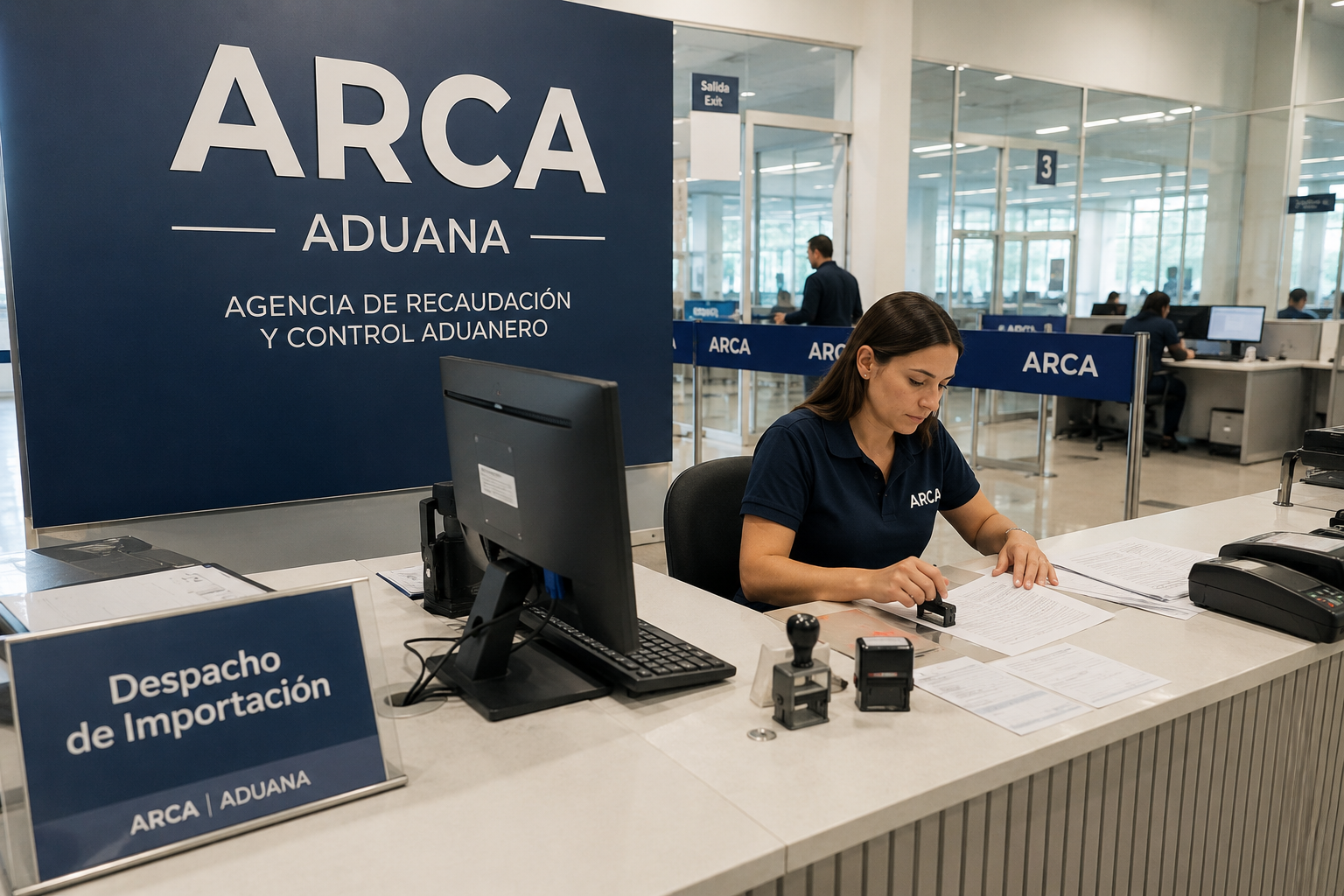
Argentina’s customs system is based on registered operators. Companies or individuals that want to import commercially must be registered before the Argentine customs and tax authority, currently ARCA, through the Special Customs Registers. These registers are the formal framework for importers, exporters and other foreign trade operators in Argentina.
This means that, in a standard commercial import, the party that clears the goods through customs must have a valid tax and customs position in Argentina.
For a U.S. company, this creates a common problem. The company may have a buyer, a product and a commercial opportunity, but no Argentine entity able to act as importer of record.
Opening a local company is one possible path, but it is not always the most efficient one. It can involve time, tax registrations, banking setup, accounting obligations and administrative costs.
For many companies, especially when testing the market or handling occasional shipments, using a local importing company is a more practical option.
Can You Import to Argentina Without a Company?
Yes, you can import to Argentina without creating your own local company, but the operation must be structured correctly.
The goods still need to be imported by a party legally enabled to act before Argentine Customs. That role can be performed by a local buyer, distributor, trading company, or specialized importing company.
In this model, COMEXAR can act as the Argentine importing company for your products, coordinating the customs clearance and helping structure the operation from a regulatory and logistical perspective.
This is especially useful when the U.S. company does not have:
A subsidiary in Argentina, a local tax ID, customs registration, an internal import department, local customs knowledge, or a trusted Argentine buyer able to import directly.
Instead of building all that infrastructure from zero, the U.S. exporter can work with
COMEXAR as a local import partner.
What ComexAR Does as an Importing Company in Argentina
COMEXAR’s role is not limited to “receiving documents” or “clearing cargo.” In a well-structured import operation, the local importer plays a central role before, during and after shipment.
The first step is the feasibility analysis. Before the goods are shipped, COMEXAR reviews the product, its technical description, tariff classification, estimated duties, taxes, restrictions, documentation requirements and possible third-party agency interventions.
This is essential because import costs in Argentina are calculated on the customs value of the goods, and duties may apply depending on the product classification. The U.S. International Trade Administration explains that Argentine import duties are generally assessed on the CIF value, meaning cost, insurance and freight at the Argentine port or airport of entry.
Once the operation is confirmed as viable, COMEXAR can act as the local importer of record, coordinate with customs brokers, prepare the customs filing, review the shipping documents, manage customs clearance and help organize the local logistics after release.
In practical terms, COMEXAR can support the U.S. exporter with:
- Import feasibility analysis before shipment.
- Tariff classification review.
- Estimated landed cost calculation.
- Import documentation review.
- Importer of record service in Argentina.
- Customs broker coordination.
- Customs clearance.
- Local delivery coordination.
- Guidance on regulatory or technical requirements.
The goal is simple: allow the U.S. company to sell into Argentina without having to create and operate its own Argentine company.
How the Import Operation Works
The process usually starts before the commercial invoice is issued. This is important because many customs problems appear when the shipment has already left the United States and the documents were prepared without considering Argentine requirements.
The first step is to send COMEXAR a detailed description of the goods. With that information, the team can analyze the product, identify the likely tariff classification, estimate import taxes and determine whether special permits, certifications or technical documentation may be required.
After that, COMEXAR reviews the commercial structure of the operation. Depending on the case, the U.S. company may sell directly to COMEXAR, to an Argentine buyer, or through another agreed commercial arrangement. The correct structure depends on the product, the final customer, the payment terms and the regulatory requirements.
Once the documents are aligned, the goods can be shipped. COMEXAR and its customs broker then manage the customs destination in Argentina, submit the required documentation and follow the release process with Customs.
The importation is only complete when the goods are released for free circulation in Argentina after payment of the corresponding duties, taxes and compliance with customs formalities. This follows the general concept of definitive importation under customs rules, where imported goods may circulate in the customs territory after duties and formalities are completed.
What Documents Does the U.S. Company Need to Provide?
The exact documentation depends on the type of product, transport mode and regulatory classification. However, most import operations into Argentina require a clear commercial and technical document package.
The U.S. supplier should usually provide:
- Proforma invoice for the initial analysis.
- Commercial invoice.
- Packing list.
- Bill of lading or air waybill.
- Technical datasheet or product specification.
- HS code suggested by the exporter.
- Country of origin information.
- Certificate of origin, when applicable.
- Insurance certificate, when applicable.
- Photos, catalogues or manuals for technical products.
- Serial numbers or model references, when relevant.
The U.S. International Trade Administration confirms that Argentine importers must present the commercial invoice issued by the overseas supplier and notes that the invoice may be in English.
For customs valuation and import verification, documents such as the invoice, packing list, transport document and insurance policy are also commonly used as supporting evidence.
The key is consistency. The product description, quantities, weights, values, Incoterms and consignee information must match across the invoice, packing list, transport document and customs declaration.
Why the Proforma Invoice Matters Before Shipping
Many U.S. companies treat the proforma invoice as a simple commercial document. For Argentina, it is much more useful than that.
A properly prepared proforma invoice allows COMEXAR to review the operation before shipment, estimate import costs and detect possible regulatory issues.
Ideally, the proforma invoice should include the seller, buyer or importer information, product description, quantity, unit value, total value, Incoterm, currency, country of origin, payment terms, delivery terms and technical references.
With this information, COMEXAR can identify risks before the goods move. That is the difference between planning an import and reacting to a customs problem.
What Products Can Be Imported This Way?
This service can be useful for many types of commercial goods, including industrial equipment, machinery, spare parts, raw materials, tools, electronic components, supplies and products for resale.
However, not every product can be imported under the same conditions.
Some products may require technical certifications, safety approvals, health registrations, labeling compliance or intervention from a specific Argentine authority. Argentina also maintains restrictions on certain used products, and U.S. official guidance notes that several used goods may face import limitations depending on the case.
That is why COMEXAR does not recommend shipping first and analyzing later. The correct process is always to review the product before the export takes place.
Risks of Importing Without the Right Local Partner
Trying to import into Argentina without understanding the local requirements can create unnecessary risks.
The most common issues are incorrect tariff classification, incomplete documents, underestimated taxes, missing certificates, wrong consignee information, lack of customs registration, delays at port or airport, and unexpected storage costs.
For a U.S. exporter, these problems can affect not only one shipment, but also the commercial relationship with the Argentine customer.
A buyer that receives unexpected costs or delays may cancel future orders, renegotiate prices or choose another supplier.
Using a qualified importer of record in Argentina reduces that risk because the operation is analyzed locally before the goods are shipped.
Why Work With COMEXAR
COMEXAR helps U.S. companies import to Argentina without opening a local company.
Instead of asking the U.S. exporter to create an Argentine entity, register as an importer, hire a customs broker and learn the local customs system, COMEXAR provides the local import structure needed to operate.
As an importing company in Argentina, COMEXAR can review the operation, estimate costs, act as importer, coordinate customs clearance and support the logistics process until the goods are released.
This service is especially valuable for companies that want to:
Enter the Argentine market, test demand before opening a subsidiary, supply an Argentine client, import machinery or equipment, sell products without a local distributor, or avoid administrative complexity in Argentina.
Import to Argentina Without a Company: The Practical Answer
So, can a U.S. company import to Argentina without a local company?
Yes, but not alone.
The company does not necessarily need to incorporate in Argentina, but the import operation must be handled by a registered Argentine importer and properly documented before Customs.
COMEXAR can serve as that local import partner.
If your company is planning to export products from the United States to Argentina, COMEXAR can analyze the feasibility of the operation, estimate the import costs, review the documentation and manage the import process through its local structure.
Contact COMEXAR before shipping your goods to Argentina. A proper analysis before export can prevent delays, unexpected costs and customs problems.