Importer of Record (IOR) Services for IT Equipment and Technology Hardware
Expanding your technology infrastructure into a new country should not require establishing a local company just to import servers, networking equipment or other IT hardware.
Yet for many international companies, moving technology across borders is far more complex than arranging transportation.
Servers, telecommunications equipment, networking hardware, storage systems, computers and data center infrastructure may be subject to specific customs classifications, import requirements, certifications, taxes and local regulations.
This is where an
Importer of Record (IOR) service becomes essential.
Comex-AR provides specialized Importer of Record services for international companies that need to deploy technology and professional equipment in foreign markets without having their own local import structure.
With experience handling technology imports for multinational organizations and companies from the United States, Mexico, Spain and other international markets, Comex-AR coordinates IOR operations for destinations including Argentina, Brazil, Uruguay, Europe, the United States and other markets through its international network.
Our objective is simple: make international technology deployment easier, predictable and compliant.
What Is an Importer of Record (IOR)?
An Importer of Record, commonly known as an IOR, is the entity responsible for importing goods into a country and complying with the customs and regulatory requirements applicable to the transaction.
Depending on the destination and structure of the operation, this may involve:
- Reviewing import requirements before shipment.
- Determining the appropriate tariff classification.
- Preparing and reviewing customs documentation.
- Coordinating permits, certifications or regulatory requirements when applicable.
- Managing customs declarations and clearance.
- Coordinating customs brokers and other local professionals.
- Handling applicable import duties and taxes according to the agreed transaction structure.
- Coordinating international transportation and local delivery.
- Maintaining the documentation associated with the import operation.
For a foreign technology company, using an IOR can eliminate one of the main barriers to deploying hardware internationally: the absence of a local entity capable of acting as the importer.
Instead of establishing an entire corporate and import infrastructure solely to receive equipment, companies can work with an experienced IOR provider to structure and execute the operation.
Why Technology Hardware Is Particularly Challenging to Import
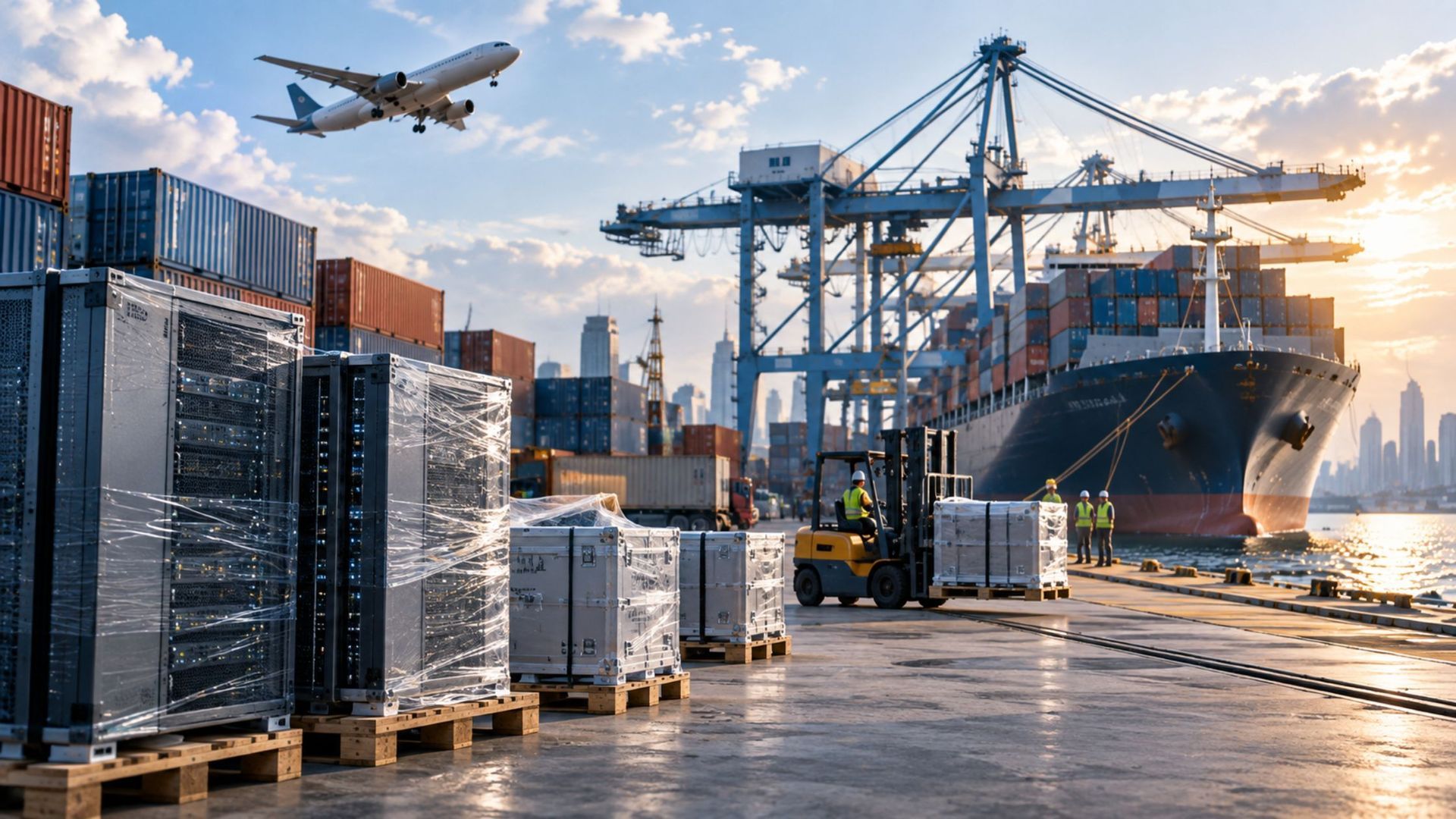
Moving a server from one country to another may look like a straightforward logistics operation.
It often isn't.
Technology imports can involve considerably more than booking an airfreight shipment and presenting an invoice to Customs.
A single deployment can include servers, switches, routers, storage systems, power equipment, wireless devices, telecommunications hardware and multiple accessories.
Each component may require analysis before shipment.
Depending on the equipment and destination country, questions can include:
What is the correct customs classification?
Different types of technology can fall under different tariff classifications, affecting duties, documentation and regulatory treatment.
Does the equipment require a certification or authorization?
Telecommunications and wireless equipment can be subject to specific technical regulations in certain markets.
Who can legally import the equipment?
A foreign company may own the hardware but still lack the local registrations or structure required to complete an import.
Who will receive the equipment?
Data centers and colocation facilities may be the final destination of the hardware without necessarily being willing or able to assume responsibility as the importer.
How should the transaction be structured?
Sales, internal company transfers, infrastructure deployments, leasing arrangements, temporary imports, proof-of-concept projects and equipment supplied under service agreements can require different customs approaches.
For these reasons, successful technology logistics begins before the equipment leaves the country of origin.
The first step should be understanding whether the shipment can be imported, under which conditions and at what estimated landed cost.
IOR Services for Servers, Data Centers and IT Infrastructure
Comex-AR has developed its Importer of Record solution with a particular focus on technology and professional equipment.
We support international shipments involving products such as:
- Enterprise servers and computing systems
- Data center equipment
- Network switches and routers
- Storage infrastructure
- Telecommunications equipment
- Computers and workstations
- IT infrastructure
- Network appliances
- Professional electronic equipment
- Components and accessories
- Other high-value technology hardware
This specialization matters.
Technology shipments frequently have high commercial values and are connected to projects with strict deployment deadlines.
A customs delay affecting ordinary merchandise is inconvenient. A customs delay involving servers required for a data center deployment can affect an entire infrastructure project.
That is why Comex-AR approaches these operations from a customs, regulatory and logistics perspective, rather than treating them as ordinary international freight.
When Does Your Company Need an Importer of Record?
There are several scenarios in which an IOR solution can make international technology deployment significantly easier.
1. Your company has no legal entity in the destination country
This is one of the most common scenarios.
A U.S., European or other foreign company needs to install hardware in another country but does not maintain a local company capable of completing the import.
Where local regulations permit an IOR structure, Comex-AR can provide the necessary import solution without requiring the customer to create an entire local import operation.
2. You are deploying servers in an international data center
A company may purchase and own its servers while placing them in a third-party data center or colocation facility.
The data center receives and hosts the hardware, but that does not necessarily mean it will act as Importer of Record.
Comex-AR can coordinate the import and subsequent delivery of the equipment to the designated facility.
3. You need to equip a new international office
Opening an office abroad can require computers, servers, networking hardware, telecommunications systems and other professional equipment.
An IOR solution allows companies to centralize the international deployment without depending entirely on local purchasing.
4. You are selling technology internationally under DDP terms
Technology manufacturers, distributors and resellers increasingly need to provide their customers with a complete delivery solution.
Under a properly structured DDP — Delivered Duty Paid operation, the seller assumes responsibility for delivering the goods to the agreed destination while coordinating the import process.
Comex-AR can evaluate and coordinate DDP solutions when the characteristics of the country and transaction allow them.
5. You are transferring your own equipment internationally
Not every international shipment represents a traditional sale.
Companies frequently move their own IT assets between offices, subsidiaries, data centers and infrastructure projects.
These operations still require an appropriate customs structure.
6. You need equipment for a temporary project or proof of concept
Some technology enters a country temporarily for testing, demonstrations, technical projects or proof-of-concept deployments.
Depending on local legislation and the characteristics of the operation, temporary import regimes may provide a more appropriate alternative than definitive importation.
The correct structure should therefore be evaluated before shipping.
How Comex-AR's Importer of Record Service Works
Every technology import starts with an analysis of the operation.
Step 1 — Project Assessment
The customer provides information about the equipment, origin, destination, value, intended use and required delivery location.
Whenever possible, technical datasheets and detailed product descriptions are analyzed at this stage.
Step 2 — Import Feasibility and Compliance Analysis
Comex-AR evaluates the customs and regulatory requirements applicable to the shipment.
This can include tariff classification, documentation, potential permits or certifications and other destination-specific requirements.
The objective is to identify potential obstacles before the cargo is shipped.
Step 3 — Landed Cost Analysis
Where required, Comex-AR estimates the costs associated with the operation, including applicable taxes, duties, customs expenses, logistics and service costs.
This gives the customer greater visibility into the expected landed cost before committing to the shipment.
Step 4 — International Transportation
Comex-AR can coordinate international transportation through specialized logistics partners.
Depending on the origin, destination, urgency, volume and characteristics of the equipment, transportation can be arranged by air, sea or land.
Step 5 — Importer of Record and Customs Clearance
Comex-AR or its corresponding local structure coordinates the import process in accordance with the regulations applicable to the destination.
Documentation is reviewed and customs clearance is coordinated with customs brokers, agents and relevant authorities.
Step 6 — Final Delivery
After customs release, Comex-AR can coordinate domestic transportation to the final destination.
This may be an office, warehouse, customer facility, telecommunications site, data center or other agreed location.
Step 7 — Shipment Monitoring and Support
Throughout the operation, our team coordinates with the parties involved, including exporters, manufacturers, freight forwarders, customs brokers, carriers and final recipients.
The result is a single coordinated international import solution instead of a fragmented chain of independent providers.
Why Choose Comex-AR for Technology IOR Services?
Not all IOR operations are the same.
Importing ordinary commercial goods and importing high-value technology infrastructure present very different challenges.
Comex-AR combines international trade expertise with hands-on experience in technology imports.
Specialized Experience in Technology
Our team has experience coordinating imports of servers, computers, networking equipment, telecommunications hardware and data center infrastructure.
This allows us to understand the operational requirements behind technology deployments, not only the customs transaction.
Experience with International Technology Companies
Comex-AR has participated in technology import operations for multinational organizations, including projects involving Microsoft, as well as companies based in the United States, Mexico, Spain and other markets.
This experience has helped us develop processes designed for international companies that need visibility, coordination and reliable execution across borders.
Customs Expertise
IOR is not simply a logistics service.
The importer assumes significant customs and documentary responsibilities.
Comex-AR's background in international trade and customs allows each operation to be analyzed from a compliance perspective before execution.
International Coverage
Comex-AR currently provides IOR and international trade solutions covering key markets including Argentina, Brazil, Uruguay, Europe and the United States, with additional destinations supported through its international network.
This gives international companies the possibility of working with one specialized partner for multiple technology deployment projects.
End-to-End Coordination
International hardware deployments can involve many parties:
manufacturer → exporter → freight forwarder → airline or shipping company → Importer of Record → customs broker → Customs → domestic carrier → data center or end customer.
Without centralized coordination, every handoff introduces another potential point of failure.
Comex-AR manages the operation as an integrated process, from the initial import analysis through customs clearance and final delivery.
IOR for Data Center Deployments
Data center infrastructure deserves particular attention.
Cloud providers, SaaS companies, telecommunications companies, AI infrastructure providers, hosting businesses and multinational corporations increasingly deploy their own hardware across multiple countries.
However, having rack space available in a foreign data center does not solve the import problem.
Before servers can be installed, they must legally enter the destination country.
An IOR solution can bridge this gap.
Comex-AR can coordinate the importation of servers and associated infrastructure and arrange delivery to the designated data center, allowing technology teams to concentrate on deployment rather than building an internal customs operation in each country.
This can be particularly useful for:
- New data center deployments
- International infrastructure expansion
- Server refresh projects
- AI and high-performance computing infrastructure
- Network expansion
- Edge computing deployments
- Colocation projects
- Disaster recovery infrastructure
- International office connectivity
Importing Technology into Argentina
Argentina is one of Comex-AR's core markets.
Foreign companies that need to deliver servers, IT infrastructure, networking equipment or professional technology into Argentina can encounter customs, documentary and regulatory requirements that are difficult to manage without local expertise.
Comex-AR provides an integrated solution combining Importer of Record, customs advisory, customs clearance coordination, international freight and final delivery.
For international companies without their own Argentine import structure, this can substantially simplify market entry and technology deployment.
Importing Technology into Brazil
Brazil represents a major technology market, but certain technology imports require careful regulatory analysis.
Depending on the product, telecommunications and connected equipment may be subject to ANATEL certification or homologation requirements, while the importer must also comply with Brazilian customs procedures.
This makes pre-shipment analysis particularly important.
Comex-AR evaluates the characteristics of the equipment and coordinates the appropriate import structure with its local network before cargo is dispatched.
For servers, networking hardware, telecommunications equipment and data center infrastructure, identifying regulatory requirements in advance can help prevent costly delays after arrival.
IOR Services in Europe and Other International Markets
Technology deployments are rarely limited to one country.
A company may need servers in Argentina, networking equipment in Brazil and additional infrastructure at a European data center.
International expansion therefore requires a scalable customs strategy.
Comex-AR's IOR model is designed to help companies evaluate and execute these projects across multiple jurisdictions while maintaining centralized coordination.
The exact import structure always depends on the destination country, product, ownership model and transaction, which is why each project is evaluated individually.
IOR vs. Setting Up a Local Import Entity
Establishing a local company can make sense when an organization plans significant and permanent commercial activity in a country.
But creating an entity solely to import occasional technology deployments can add unnecessary complexity.
A local entity can involve corporate registration, tax administration, accounting, import registrations, banking and ongoing compliance obligations.
An IOR service offers a different approach.
Instead of building permanent infrastructure for individual or periodic imports, companies can access an existing import structure and the expertise required to execute the transaction.
For companies expanding data centers, offices and technology infrastructure internationally, this can make entering new markets considerably faster and more operationally efficient.
Reduce Import Risk Before Your Equipment Ships
One of the most expensive mistakes in international technology logistics is discovering an import problem after the equipment has already arrived at the destination port or airport.
At that point, storage costs may begin accumulating while teams try to solve documentation, classification, certification or importer-related problems.
The better approach is preventive.
Before shipping, companies should know:
Can this equipment be legally imported?
Who will be the Importer of Record?
What documentation is required?
Does the product require certification or authorization?
What is its tariff classification?
What duties and taxes may apply?
What will the estimated landed cost be?
How will the cargo move from Customs to the final destination?
Answering these questions before departure turns customs compliance into part of the project plan rather than an emergency.
One Partner for Your International Technology Imports
Deploying technology globally should not mean becoming an expert in the customs regulations of every country.
That is the role of an experienced international trade partner.
Comex-AR combines Importer of Record services, customs expertise, international logistics and final-mile coordination to help technology companies move hardware across borders efficiently and compliantly.
Whether you need to import a single high-value server, equip an international office, deliver networking hardware to a customer or coordinate a complete data center deployment, our team can evaluate the project before shipment and design the appropriate import solution.
Planning an International IT Hardware Deployment?
Tell us:
- What equipment you need to import
- Country of origin
- Destination country
- Approximate commercial value
- Final delivery location
- Expected shipping date
Our international trade specialists will analyze the operation and determine the appropriate Importer of Record solution, customs requirements and logistics structure for your project.
Talk to Comex-AR about your next technology import.